We are not an environment charity and are not politically-aligned. We have fought successfully for 8 years to stop Gunns Ltd and the State and Federal Governments from building the worlds largest pulp mill in a valley that is home to 100,000 people on the island of Tasmania. TAP was the first group to oppose a pulp mill in the Tamar Valley. We were originally called TRAC which became TAP Into A Better Tasmania. TAP was the first community group in Tasmania to oppose industrial tree plantations.
What’s New
TAP NOW MEETS ON THE 2ND TUESDAY OF THE MONTH
THE NEXT TAP MEETING IS TUESDAY MAY 14 AT THE WINDSOR COMMUNITY CENTER 7.30pm
TAP Saddened By The Death Of Bob McMahon
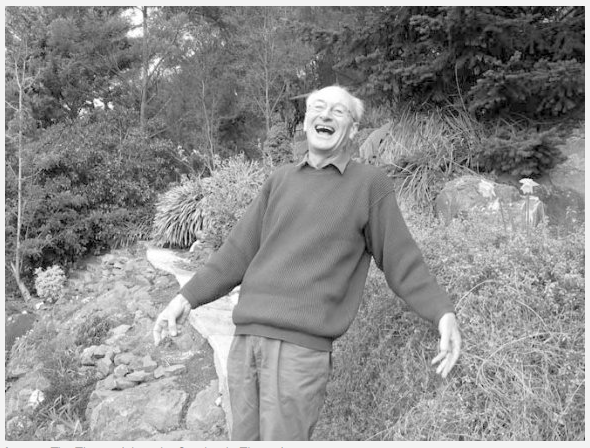
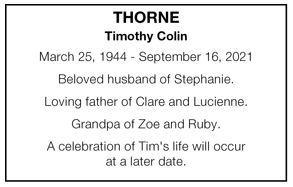
We were all shocked at the sudden passing of Robert McMahon or Bob as we all knew him. Bob passed away peacfully in his sleep on Wednesday April 17 2013. Bob was there at the begining and we don't think anybody has done more for the Tamar Valley or even Tasmania than Bob McMahon. Bob was a legend and he will be sorely missed. He has left a massive legacy of honesty, intelligence, and the love of nature in its wild and untamed form. He had the courage to stare down the small-minded and self-interested who tried to profit at our expense. Bob wanted the best for Tasmania and everybody that was fortunate enough to meet him.
______________________________________________________________________________________________________________
Gunns goes into liquidation
CREDITORS have voted to liquidate failed Tasmanian timber company Gunns.
About 80 people owed money by the former timber giant attended a second creditors meeting in Launceston today, organised by administrator PPB Advisory.
"The creditors resolved unanimously to wind up the Gunns group of companies," PPB's Daniel Bryant told reporters.
Mr Bryant said PPB, now the liquidator, would examine whether recovery could include action against former directors.
Creditors had been offered little choice after a detailed report from PPB released last week found they were unlikely to see any money.
The report concluded Gunns has debts of about $3 billion and recommended liquidation.
It said workers' entitlements, totalling about $10 million, would be paid.
The man who pulped the pulp mill
September 28, 2012
Bob McMahon vowed a pulp mill would never happen in Tasmania.
When Bob McMahon saw the environmental havoc caused by a pulp mill in Chile he vowed it wouldn't happen in Tasmania.
AT THE height of the Tasmanian pulp mill protest, Bob McMahon's phone would start ringing at 6am and wouldn't stop until midnight. McMahon was the go-to man everyone would call about the $2.3 billion project at Bell Bay first proposed in 2004 by the giant timber company, Gunns.
Back then, the project was hailed by federal government, with then prime minister John Howard pledging to throw in $5 million as a pre-election sweetener. Opposition leader Mark Latham also backed the mill as a big plus for the island state's environment and economy. The Tasmanian government welcomed it, as did the Chamber of Commerce, but McMahon's small band of protesters - under the banner of TAP (Tasmanians Against the Pulp mill) - would not go away and their campaign became one of the longest and most divisive in Australian history.
Tasmanians protest against the pulp mill.
McMahon's wife, Susie, says her husband became the voice of the protest movement because he could ''think on his feet''. She recalls the media would often ring early in the morning and McMahon would ''get straight out of bed, open his eyes and give a quote that made sense''.
Their Launceston home became TAP campaign headquarters and month after month, year after year, the couple became a contact point for the community. McMahon, a rock-climbing instructor, grew from a crowd-shy outdoors bloke, a former kid with a stutter, to a leader who addressed hundreds of rallies and meetings so effectively that the 137-year-old Gunns company, also plagued by dropping pulp prices and the high Australian dollar, eventually buckled.
''We held river rallies with big flotillas of boats,'' he says. ''We had up to 15,000 people protest in the streets of Launceston. We turned the West Tamar Council and the Launceston City Council against the mill by sheer public pressure.
''To this day no one can work out how we were so far ahead of Gunns but we would get many anonymous phone calls with information. A typical call would be something like: 'I can't tell you how I found this out, Bob, but …' then they would pass something on and hang up.''
On Tuesday, eight years after the mill was first proposed, the once-mighty Gunns went into administration, $900 million in debt. The McMahons' phone rang again with calls from media and supporters. Finally, it seemed, Goliath had fallen and the Bell Bay pulp mill - like an earlier pulp mill proposed by a foreign conglomerate at Tasmania's Wesley Vale in the 1980s - was dead.
Whether this would have happened if McMahon had not led the charge is a moot point - but the strange fact is that his transformation to unlikely crusader came about thanks to a random seat allocation on a plane flight in Chile in January 2005.
McMahon had been heading south out of Santiago on holiday, intent on sailing and rock-climbing, but happened to notice a report in the newspaper being read by the man in the next seat. The report concerned widespread pollution caused by a new pulp mill in the wetlands at Valdivia in southern Chile, an environmental scandal in which both wildlife and plant life had been wiped out. According to the report there were public calls for the mill to be shut down.
It turned out McMahon's fellow passenger was an architect with the firm involved in the mill's design and construction who confessed he was feeling guilty about it.
''This mill was similar to the one planned by Gunns in the Tamar Valley,'' says McMahon, ''and when I returned home I discovered that the Bell Bay plant was not to be a chlorine-free mill, as originally suggested, but a standard mill right in everyone's backyard on the banks of the Tamar River and adjacent to the woodchip mountains at Long Reach.''
McMahon realised that Launceston and Valdivia are almost geographic twins. They are on the same latitude, both are located at the confluence of two rivers, and they are subject to tidal changes.
It was no coincidence that two investigators from the Tasmanian government's pulp mill task force visited the Valdivian wetlands the same year, writing a report in 2006 on the pulp mill that noted a dramatic loss of bird life due to the ''severe and widespread decline of an aquatic plant'' but stating that the cause was ''inconclusive''.
Bob McMahon thought this was ''hogwash''. Earlier that year, a Chilean forestry student, Marianela Rosas, had visited the University of Tasmania's Launceston campus and given a lecture on this worsening Chilean disaster. There had been violent protest from local fishermen about effluent pumped into the sea, she said. The mill had been forced to shut down three times by regulators because of environmental concerns. And most tragically, all the area's beautiful black-necked swans had died or left.
In scenes more befitting a horror movie, she said some had even fallen dead from the sky, some crashing through car windscreens.
It was evidence Bob McMahon could not ignore and in June 2006 he returned to Chile to investigate first-hand. His sole local contact was Marianela Rosas, but it was a Chilean taxi driver named Luis who drove McMahon in from the airport who was first to raise the red flag. Luis had heard why McMahon was there and began waving his arms wildly .
''Los cisnes mueren! Los pajaros mueren!'' he shouted, words that sent a shiver down McMahon's spine. McMahon knew only a little Spanish but enough to know that ''cisnes'' was the word for swans, ''pajaros'' was birds and ''mueren'', was the word for death.
''Luis took his hands off the steering wheel and flapped his arms like a bird flying,'' McMahon wrote in his diary. ''He was almost in tears. It was obvious that something awful had happened there.''
Rosas introduced McMahon to Dr Eduardo Jaramillo, a professor of ecology and marine biology, the man who had traced the cause of the pollution in the Valdivian wetlands. McMahon recalls: ''The first warning signs of an environmental problem occurred late in 2004 when a dramatic decrease in the population of black-necked swans was noticed due to migration and an increase in mortality.
''The second sign was the demise of the aquatic plant luchecillo, the primary food of swans and other herbivorous birds, which occurred in the first three months of 2004. A month later, brown water began coming down the river into the city.''
Residents in Valdivia suspected the pulp mill 50 kilometres upstream was responsible and a scientific investigation confirmed that the cause was the mill's wastewater effluent.
Jaramillo explained that aluminium sulphate was being used as a reagent in treating the water and that produced aluminium hydroxide, which caused chemical particles to coagulate and drop to the bed of the wetlands. The high levels of sulphates, chlorines and heavy metals killed off the aquatic plants.
The luchecillo plant just turned into mucous. Autopsies of dead swans revealed they were about two kilograms lighter than healthy five-kilogram birds. Cygnets were stunted and would never be able to fly. The stomachs of the dead birds contained nothing but sediment and parasites.
Horrified by this ecological nightmare, Bob returned to Launceston and threw himself into the campaign against the Gunns plant. By 2007 he was addressing scores of public protest meetings, telling one gathering in West Tamar that their region had been set up to be a sacrifice zone.
''But the sacrifice zone is not restricted to the Tamar and its 100,000 people,'' he said. ''It extends into Bass Strait where the Bass Strait fishery could be wiped out. Who would want to catch, buy, let alone eat fish that is contaminated or perceived to be contaminated. Would you?''
He said the sacrifice zone would extend to all Tasmania's farmland, especially in the north of the state.
''The area of plantations required to feed this pulp mill, one of the biggest modern pulp mills in the world, will gobble up our farmland. Tasmania will have to sacrifice food production for tree plantations; perhaps all our food production if this dumb project is allowed to run its course. That is not a fair exchange. That is suicide. You can't eat trees.
''Tasmania produces 70 per cent of all Australia's processed vegetables. Already more than 20 per cent of our farms have gone under trees. The pulp mill, if it were to last a hundred years as pulp mills do, requires just about all of our farmland.''
McMahon quoted some figures that showed losses heavily outweighed gains. For every dollar the pulp mill generated, Tasmanians would lose three dollars through losses in food production, fishing, wine production and tourism. ''We are told the pulp mill would generate $6.7 billion over 30 years. In that time Tasmania will lose something in the order of $20 billion.''
By the time federal Environment Minister Tony Burke finally granted approval for the project last year, it was already too late for Gunns. The company was in financial strife and last month it told the stock exchange it might not be able to proceed with the mill.
Tellingly, the company accountants began listing the $250 million already spent as an ''expense'' rather than an ''asset''. When the company went into administration this week its shares, once worth $16, were at 2¢. On the night of that announcement Bob and Susie McMahon, who met as teenagers at a Hobart art school, opened a bottle of champagne to celebrate. They say they inflicted ''death by a thousand cuts'' on Gunns. They hope now that the struggle is finally over.
With two children and five grandchildren, the couple have returned happily to their previous routines, Susie crafting dolls that she sells on the internet and Bob enjoying the solitude of outdoor life. Named by Rock magazine as one of Australia's 50 top climbers, Bob McMahon is clawing his way up impossibly steep cliff faces again as an instructor and has resumed his ambition to walk, in stages, the entire coastline of Tasmania.
He says the long pulp mill dispute hampered Tasmanian progress for almost a decade. ''But our campaign is often misunderstood,'' he says. ''Everyone thinks it was purely environmental. It was actually a community campaign, a socio-economic campaign that began because of a great sense of injustice, because the costs and the risks were going to be borne by the community and the benefits, if any, were going to be gained by private enterprise with massive government support.''
Read more: http://www.theage.com.au/national/the-man-who-pulped-the-pulp-mill-20120927-26nwk.html#ixzz27rmjHoU9
We are pleased to announce Bob McMahaon is the 2012 Tasmanian Times Tasmanian Of The Year
Tasmanian Times always supported TAP and our struggle against the pulp mill. Tasmanian Times provides a forum for all of us. We are more than happy to be hosting this year's 'Tasmanian Of The Year Award'. Our guests for the evening are the Tasmanian Times Editor Lindsay Tuffin and previous Tasmanian Of The Year winner Dr Alison Bleaney. Our special guest speaker is Dr Warwick Raverty.
Rosevears Waterfront Tavern 215 Rosevears Drive 6.30 for 7.00pm. ___________________________________________________________
September 25 GUNNS DEAD
September 2012
Gunns has no pulse. They have been in a stock trading halt for so long their share price shows a flat line. Where are their loyal friends now? People like Giddings, Hodgman, The Examiner, Southern Cross Television, the TCCI and the other rabid pulp mill zealots.
TAP BIRTHDAY
Abseiling at TAP's 6th birthday party June 3 2012 - The high-flying ladies of TAP - Photo Gallery
GUNNS PERMANENT TRADING HALT - COMPANY INSOLVENT
Gunns are trying to raise $400 million which is as much as they are losing EVERY YEAR. They are $800 million in debt
and they want to make bleached Kraft pulp that is declining in demand by 8% a year. Workers in Brazil making pulp earn 25%
of what Australian workers get. Gunns want to make electricity by burning trees although Tasmania now has an electricity glut.
Chandler Dumps Gunns, L'Estrange Blames The Greens
The campaign against the 'Richard Chandler Capital Corporation' investing in the corrupt pulp mill had only
just started. Now Greg L'Estrange has blamed the Greens for failing 'due diligence'. It's about time
L'Estrange blamed himself for once. He's not polluting Bass Strait or the Tamar Valley to help Tasmania.
If Gunns finds another financier the same thing will happen.
Mercury poll February 8 2012 Advocate poll February 15 2012
JOHN GAY TO FACE THE SUPREME COURT IN LAUNCESTON ON APRIL 16 CHARGED WITH 'INSIDER TRADING'
DECEMBER 12 2011- LAUNCESTON CITY COUNCIL REJECTS PECK'S MOTION TO SUPPORT THE PULP MILL
THANKS SUCKERS
TAP BLACKFLAGS GUNNS HEAD OFFICE SEPT 15

GUNNS PULP MILL PERMITS EXPIRED ON AUGUST 30 2011 :(
TAP PROTESTS AT THE 2011 STATE LABOR CONFERENCE

On Sunday August 7 2011 Prime Minister Gillard and Premier Giddings signed an agreement in the Country Club Casino Launceston, that is supposed to bring peace to Tasmania's bitter forest disputes. TAP was the only group represented there on that wintry morning. TAP also 'black-flagged' the 2011 State Labor Conference on Saturday August 6. We joined nurses, teachers, police and other anti-mill groups including CODE outside the State Labor Conference.
TAP GATECRASHES THE EAST TAMAR HIGHWAY OPENING
On Tuesday June 7 TAP 'black-flagged' the opening of the $70 million East Tamar Highway. TAP outnumbered David O'Byrne and his group of officials at the opening. When the TAP banner 'Gunns Says Thanks' arrived the officials went into a state of visible shock. This 'log truck highway' has always been about Gunns. Most of the water pipeline for their now abandoned mill travels in its corridor. Still unpaid for by Gunns.
TAP BLACKFLAGS PARLIAMENT
On Wed May 25 TAP blackflagged Parliament House. The Greens presented the PMAA 2007 repeal bill inside at 4pm. Another succesful TAP action that shows the Tasmanian politicians who really runs this island. We do! Predictably the LibLabs voted against the Grens motion and predictably they displayed their support for a non existant project. Does it get any weirder than that?


TAP DEMOCRACY BETRAYED RALLY MAY14 LAUNCESTON
WATCH ABCANONFUL'S VIDEO OF THE RALLY ON YOUTUBE HERE
TAP media releases. See TAP media releases. (updated May 12 2011)
Gunns share price also at www.google.com/finance shows movements in the price of Gunns Ltd shares. Prices were at a high of $4.45 on 4 January 2005 around the time of announcement of the planned pulp mill. Closing price on 7 April 2011 $0.615.
Letter to Mr Bill Kelty re "Forest Principles" negotiations. Dear Mr Kelty, TAP Into A Better Tasmania understands that you are prepared to meet with members of the public and community groups. TAP Into A Better Tasmania has not received an invitation to meet with you nor will we be seeking a meeting... See Letter 17 to Mr bill Kelty on "Forest Principles" negotiations with the community. (added 10 Mar 11)
Mr Greg L’Estrange, Managing Director of Gunns Ltd posted a letter dated 25 January 2011 to Bob McMahon, spokesman for TAP, inviting TAP to a private briefing. It is a remarkable letter, the first and only one from Gunns to TAP since the pulp mill was mooted. It also refers a number of times to the 'survival of Gunns Ltd' and will be of keen interest to shareholders. Read . Mr L'Estrange's letter and TAP's response (added 4 Feb 11)
FSC assessment problems. Gunns withdraws Tasmania from next FSC assessment. FSC (11 Jan 11)
Plantation Growers Update. Gunns is devoting considerable resources to a project aimed at achieving FSC certification. See Grower update (11 Jan 11)
Online opinion poll results. Of 2007 respondents, 80% do not want Gunns pulp mill in Tasmania. See Opinion poll (added 1 Jan 11)
Why the Tamar Valley is worst site for a pulp mill. Open letter from pulp and paper expert Dr Warwick Raverty. Pulp mill supporter Ivan Dean claims there will be no odour. Pulp mill expert Dr Raverty responds to Ivan Dean (updated 4 Jan 11)
Briefing Paper: Why The Community Isn’t Buying The Big 'Forest Principles' Sell. How did we arrive at the point where the aims of some environment groups now mesh with industry, where conservationists signed up to support a plantation industry and a pulp mill in Tasmania, and the community was sidelined? Read the in depth briefing paper on the current debate over the future of Tasmanian forestry and Gunns’ planned pulp mill (17 Nov 10)
A foul smell CEO of Gunns Ltd, Greg L’Estrange told ABC Stateline (25.10.10) that Gunns would work “with the community so they understood what the pulp mill facility planned for the Tamar Valley is”. We don’t feel confident that he will explain why his pulp mill will stink as do all others of this type around the world. Further research by TAP Into A Better Tasmania has followed the foul odour trail through leaked letters, restricted terms of reference and incomplete reports to produce an Odour Advisory. It tells the story that Greg L’Estrange won’t and why it is a significant risk for business and health of the 100 000 people who live in the Tamar Valley. Go to Odour Advisory. (15 Nov 10)
Talent, Innovation, Diversity and Environment (TIDE). TAP supports promotion of TIDE and a shift in government policies towards promoting more diversified resilient sustainable development based on Tasmania’s unique clean island qualities, niche markets and favourable climate. But Gunns' proposed pulp mill is damaging to TIDE and displaces opportunities for community and regional growth. Go to TIDE. (18 Oct 10)
Is Gunns Ltd Reliable? has been updated with a new section "Economic Management' and expanded to 230 statements from Gunns and governments about the proposed pulp mill. Download your copy from Is Gunns Ltd Reliable? (uploaded 11 October 10).
Just how healthy is Gunns' balance sheet? Gunns’ latest full financials released on 30th September attempt to gloss over the grim reality of the forest industry’s slow motion train wreck. Read John Lawrence's penetrating analysis of Gunns' financial health Gunns. Is the worst over? and Gunns: The next chapter? (updated 25 Oct 10)
Forum stories on Robert Eastment's claims and on pulp mill wood supply issues. See home page below (added 31 August 10)
Gunns' planned pulp mill on the nose for voters. Polling of the northern Tasmanian 63 telephone district shows a clear majority of the electorate is less likely to vote for a political party that intends to support Gunns proposed pulp mill with taxpayer funds. See TAP media releases. (Added 2 August 10)
- Read more
- 9621 reads
23 March 2011 Joint Media Release TAP Into A Better Tasmania (TAP) and Tasmanian Public and Environmental Health Network (TPEHN)
Community Groups TAP and TPEHN join in condemning the ‘forest principle agreement’ because it is very specifically tied to the delivery of the Gunns' Tamar Valley pulp mill.
As reported in The Australian yesterday, Bill Kelty said ‘green’ groups must strike a deal on the Gunns' Tamar Valley pulp mill or miss out on permanent protection of 565,000 hectares of native forest.
“There you have it. This is what the ‘roundtable’ negotiations have been about all along,” commented Dr Alison Bleaney of TPEHN.
“From the point of view of Gunns and the Labor Party, the forest ‘roundtable’ was about delivering the Long Reach pulp mill. From the ENGO’s side it was about delivering protection to native forest. They were the two glittering prizes up for grabs and to pretend otherwise is misleading,” said TAP spokesperson Bob McMahon.
“In order for both sides to get what they wanted it was important to exclude the community first and foremost. Why? Because it was expected that the community would be opposed to any trade-off of the sort so bluntly expressed by Kelty”, continued McMahon.
“After all, the community was going to have to pay the price for the sort of deal the forest industry negotiators had in mind. The community had to be sidelined and kept in the dark. Thus the secrecy. We were the sacrifice."
“That the blatantly undemocratic, rigged and secret ‘roundtable’ negotiations and the ‘forest principles’ that resulted (including in principle support for plantations and ‘a pulp mill’) received the enthusiastic support of the ALP is no surprise."
“That the Greens have also been enthusiastic supporters of the undemocratic negotiations as constituted, and the ‘forest principles’ that resulted from the illegitimate process, is deeply distressing for the community and incredibly damaging to the Greens themselves,” said McMahon.
“Kelty has made it abundantly clear that the success of the Gunns/ALP pulp mill is dependent on the signing of the ‘forest principles agreement’,” said Dr. Bleaney.
“Therefore, both TAP and TPEHN, demand that The Wilderness Society, Environment Tasmania and Australian Conservation Foundation either refuse to sign the agreement as it exists or insist that the Gunns Tamar Valley pulp mill be specifically excluded from the agreement as a principle."
“We expect many other community groups will join us in making this demand”.
“It is not too late for the Greens to redeem themselves either”, confirmed Bob McMahon. “They will have to stop the doublethink and unequivocally withdraw their support for the ‘forest principles’ as they stand and the illegitimate roundtable process which produced them. It is not good enough for the Greens to say they do not support the Tamar Valley pulp mill while supporting a process designed from the very beginning to deliver that very same pulp mill.
“Dr Bleaney and I want to put this bizarre chapter of Tasmanian history into context. This is a monumental issue of social justice. Should the environment groups sign up to the ‘forest principles’ deal as it currently exists it will be viewed as a great betrayal of current and future generations of Tasmanians, whose social, economic and environmental horizons will be severely diminished and restricted by the demands Gunns mill will place on our basic resources of land and water and of the huge public subsidies the mill will need in order to compete against cheaper producers in developing countries.
Contact:
Bob McMahon 0448 547290 TAP
Dr Alison Bleaney 0417 302549 Tasmanian Public and Environmental Health Network
- 1675 reads
UNITE ON SITE - Pulp the Mill - Peaceful Protest Sunday 20th March at 11:30am
For the Tamar Valley, Bass Strait and all Tasmanians...
STOP THE TAMAR VALLEY PULP MILL!!! Start time 11.30am.
Join Peter Cundall, Richard Flanagan, Kim Booth and spokespeople from anti-pulp mill groups at a peaceful community protest at the Batman Bridge Reserve.
We are gathering to assert our continued opposition to this mill for the following reasons:
1. Toxic effluent in Bass Strait
2. Threats to the livelihood and lifestyle of thousands of Tamar Valley residents
3. Fresh water usage
4. Possible future use of native forests
5. The draconian and undemocratic Section 11 of the Pulp Mill Assessment Act.
6. Lack of an independent, transparent assessment of a “critically non-compliant” mill
7. Lack of public hearings and community consultation
8. A complete lack of faith in Gunns.
Time: 11.30 start on Sunday 20th March.
Don’t miss this Beaconsfield public meeting. Six politicians have now agreed to hear your concerns on the proposed pulp mill. TAP regular meeting cancelled
When: 7.30pm Thursday 31 March 2011
TAP Briefing Paper: Why The Community Isn’t Buying The Big Sell
This is a briefing paper on the current debate over the future of Tasmanian forestry and Gunns’ planned pulp mill prepared by TAP Into A Better Tasmania, November 2010. A pdf is available for downloading from below.
For further information please contact media spokesman Robert McMahon on 0448 547 290 or email bob@orielstudio.com.au
Introduction
A stalled proposal for a world scale pulp mill, the slow motion collapse of the forest industry, the astonishing alignment of environmental groups behind industry for a plantation-based pulp mill and the prospect of big money changing hands marks an extraordinary period in a small island’s history.
So how did all this happen? It’s time to examine the causes in detail because to misdiagnose the causes invites the wrong solution. One solution being proposed, for example, involves ‘compensating’ the forest industry to the tune of over a billion dollars. But that in turn carries its own serious consequences eg. lack of funding for public hospitals.
The interpretation of the causes presented here provides a big picture perspective from a hitherto ignored community view, the one that the special interest groups involved don’t want to hear.
So how did we arrive at the point where the aims of some environment groups now mesh with industry, where conservationists signed up to support a plantation industry and a pulp mill in Tasmania, and the community was sidelined?
The story started decades ago.
- Read more
- 2121 reads
A smelly tale of foul odour - Odour Advisory
Introduction
CEO of Gunns Ltd, Greg L’Estrange told ABC Stateline (25.10.10) that Gunns would work “with the community so they understood what the pulp mill facility planned for the Tamar Valley is”.
We don’t feel confident that he will explain why his pulp mill will stink as do all others of this type around the world. So TAP Into A Better Tasmania has followed the foul odour trail through leaked letters, restricted terms of reference and incomplete reports to produce this Odour Advisory. It tells the story that Greg L’Estrange won’t and why it is a significant risk for business and health of the 100 000 people who live in the Tamar Valley.
The assessment of this issue carried out to date has looked only at odour from the stack, and not at odour which after about twelve months starts to leak from thousands of pipe seals and other leakage points. These fugitive emissions pose the biggest threat to your business, as they make up 98% of the odour escaping from pulp mills, including the most modern ones.
The Resource Planning and Development Commission (RPDC), which was initially given the task of assessing Gunns’ proposal, determined that the odour zone would have a radius of 55k around the Long Reach site. This odour will affect all wineries, tourist operators and other businesses in the zone; Tamar Ridge is of course only 5km from the site and will be one of the businesses worst affected.
This poses serious political, financial and project risks for potential joint venture partners and business investors alike. If a financial backer can be found, only one more regulatory hurdle (permit for marine discharge into Commonwealth waters in Bass Strait) has to be cleared before construction may begin.
The history of the failed assessment of odour is summarised in the next few paragraphs.
- Read more
- 2742 reads
Gunns: The Next Chapter by John Lawrence
First published on Tasmanian Times
The Truth and Reconciliation Roadshow continued last week with a presentation by Gunns’ CEO to a conference run by investment bank UBS, coincidentally a Gunns’ shareholder.
The changes from the presentation which accompanied the release of Gunns’ preliminary 2010 financials in mid August were subtle and revealing of the future chosen path.
John Gay’s business model was then described as being “a conglomerate of long life low yielding assets…..(consisting of) many businesses….. excessive levels of encumbered assets .....excessive debt levels to earnings,..... (where) potential investors do not understand the business.”
The latest presentation includes further criticisms of the old model. Mr L’Estrange confirmed that Gunns was “cash negative” and was bedevilled by “aging inefficient assets”.
Cash negativity is a fairly serious condition. If it persists disaster usually awaits. Aging inefficient assets make the problem worse. Forget about a social license. Gunns needs cash and a more ‘efficient’ portfolio of assets.
In August the new look Gunns was to comprise a division devoted to ‘hardwood and softwood’ sawmilling.
This has now been revised to ‘softwood processing’ only. No mention of hardwood sawmilling. Literally, this means an exit from all hardwood sawmilling not just native forest sawmilling.
Normally a CEO when spruiking his Company will attempt to explain and justify the latest P&L Statement. UBS has been critical in the past of the book entries of Dickensian proportions that have been used to prepare Gunns’ financial accounts. Hence Greg didn’t dwell on Gunns’ appalling 2010 results. He was on a hiding to nothing. He simply said “if your investment focus is purely about this year’s trading, GNS is not your stock”.
Never a truer word has been uttered.
- Read more
- 2839 reads
TIDE framework for community and regional growth
TAP supports promotion of Talent, Innovation, Diversity and Environment (TIDE) and a shift in government policies towards promoting more diversified resilient sustainable development based on Tasmania’s unique clean island qualities, niche markets and favourable climate. But Gunns' proposed pulp mill is damaging to TIDE and displaces opportunities for community and regional growth.
Adapted from the Cool Cities program, Michigan, USA, the acronym TIDE represents four conditions that are holistic and systemic rather than causal. Each one is necessary but by itself is insufficient for generating long term prosperity. To attract creative people, generate innovation and stimulate economic growth, there must be substantial, balanced performance across all four.
In TAP’s assessment, Gunns’ proposed pulp mill has a negative effect on Talent, Innovation, Diversity and Environment and therefore scores a fail on each condition.
- Read more
- 1887 reads